
 By
By 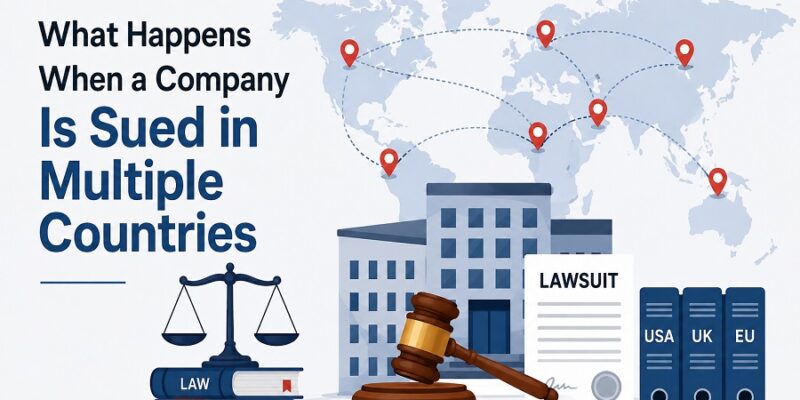
When a multinational corporation gets sued in several countries at once, it faces a tangled web of different legal systems, court procedures, and international treaties.
A global company sued in multiple countries usually deals with separate legal proceedings in each place, even if the cases involve similar claims and evidence. That creates big headaches for both the company and the people seeking accountability.
Cross-border disputes keep popping up as businesses expand worldwide. The same corporate decision or product defect can hurt people in different countries, so you end up with parallel lawsuits that might have totally different outcomes.
These cases force everyone to ask tough questions: Which courts get to decide? Which laws matter? And how do you actually make a judgment stick in another country?
Jurisdictional Complexities in Multinational Disputes
When a global company faces lawsuits in multiple countries, courts have to figure out which legal system gets to handle the case. Jurisdiction depends on the company’s ties to each location, and parties rarely agree on where the fight should happen.
Types of Jurisdiction and Their Implications
Courts recognize a few types of jurisdiction in cross-border cases. Personal jurisdiction means a court has power over a specific defendant if they have real connections to that place.
General jurisdiction applies when a company has ongoing, substantial business in a country—so courts there can hear almost any claim against them. Specific jurisdiction comes into play when the lawsuit connects directly to the company’s activities in that spot.
These differences really matter. Plaintiffs can file where they have the best shot. A multinational with offices in ten countries might face lawsuits in all of them, while a company with minimal presence somewhere might only get sued for things that happened there.
Companies exposed to general jurisdiction in lots of places have more legal risk. Plaintiffs get to pick and choose forums, which can give them an edge.
Determining the Proper Forum
Court systems use their own tests to decide if they should hear an international case. Judges look at the defendant’s physical presence, business operations, and how connected they are to the jurisdiction.
Standards differ a lot. Some countries are fine with minimal contact; others want much stronger ties. In the U.S., judges use a “minimum contacts” approach that weighs fairness. European courts focus more on where the defendant lives or where the harm happened.
Judges also consider whether hearing the case is fair to everyone involved. They look at where witnesses and evidence are, which country’s laws apply, and whether another court might be a better fit.
Jurisdiction Clauses and Forum Selection
International contracts often include jurisdiction clauses that spell out where disputes have to go. A forum selection clause names a specific court or country for arguments.
Courts usually enforce these clauses unless they’re obviously unreasonable. Companies use them to herd disputes into predictable courts and avoid legal chaos.
But these clauses only bind people who signed the contract. If outsiders get hurt by a company’s actions, they aren’t stuck with the chosen forum. That’s why even the best-drafted contracts can’t stop parallel lawsuits from popping up in other countries.
Jurisdictional Challenges and Forum Shopping
Parties often fight over whether a court actually has the right to hear a cross-border case. Defendants try to dodge, plaintiffs try to keep their options open. These squabbles can drag things out for ages.
Forum shopping is when plaintiffs file in places they think will treat them better. They might hunt for bigger damages, friendlier rules, or just a more sympathetic ear. Companies see this as gaming the system, but for plaintiffs, it’s just smart lawyering.
Courts try to shut down blatant forum shopping with doctrines like forum non conveniens. Judges can toss a case if another court clearly makes more sense, but deciding that isn’t always straightforward.
When lawsuits start in multiple countries at once, it’s not always clear which court should go first. Different countries have their own rules about deferring to earlier cases or pausing things while another court decides.
Litigation Across Borders: Procedures and Parallel Proceedings
When a global company gets sued in different countries, the legal actions often move forward at the same time in separate court systems. These parallel proceedings bring a mess of procedural headaches that require careful coordination and sometimes a bit of improvisation.
Initiating Legal Action in Multiple Countries
Plaintiffs might file lawsuits against a global company in several countries at once. This happens when the company operates in multiple places or when harm spreads across borders.
Each country has its own rules about when its courts can get involved. Some forums offer better remedies or let plaintiffs reach more defendants. Others just handle a different part of the overall fight.
Sometimes, filing in multiple countries is just necessary—one court might not have power over all the parties or all the issues. Companies have to answer each lawsuit under the local rules, no matter how frustrating that gets.
Managing Parallel Proceedings
Parallel proceedings mean the same dispute, same parties, but different courts in two or more countries. It’s tricky for everyone.
Courts might reach totally different conclusions about the same facts. One judge could order a company to do something that another judge forbids. Timelines rarely line up.
Common headaches include:
- Duplicate discovery demands in different countries
- Conflicting legal rulings
- Sky-high costs from fighting on multiple fronts
- Big advantage for whoever has deeper pockets
Some courts issue antisuit injunctions to block parties from litigating elsewhere. The idea is to avoid pointless duplication, but foreign courts don’t always listen or care.
Service of Process and Gathering Evidence
Serving legal papers across borders isn’t simple. The Hague Service Convention sets out ways to deliver documents internationally, but not every country follows it.
Some places accept email or courier service. Others insist on government channels or even diplomatic routes, which can take ages.
Getting evidence from abroad relies on the Hague Evidence Convention. Courts send formal requests through central authorities to collect testimony or documents from other countries.
Main ways to gather evidence include:
- Letters rogatory (official court requests)
- Direct evidence-taking, if allowed
- Depositions at embassies or consulates
- Document production using local rules
Some countries don’t like sending evidence overseas and might block requests they think go too far.
Court Procedures and Filing a Claim
Filing a lawsuit in another country means following that country’s rules—format, language, everything. Most courts want all filings translated, which can get expensive fast.
Procedures vary. Common law countries use lots of pre-trial discovery, while civil law countries prefer judge-led investigation and written arguments.
Deadlines, fees, and document rules differ everywhere. Some places require local lawyers to handle filings. Others let foreign lawyers in, but only with special permission.
The plaintiff has to show the foreign court has jurisdiction over the defendant and the dispute. That usually means proving a real connection to the country where the case is filed.
Dispute Resolution Mechanisms for Global Companies
Global companies don’t always want to fight it out in court. They have other ways to resolve disputes, and these options can save time, money, and stress—especially when multiple countries are involved.
International Arbitration and Enforcement
International arbitration lets parties settle disputes privately, outside public courts. Companies often write arbitration clauses into contracts so arguments go to arbitration instead of litigation.
The New York Convention makes arbitration especially attractive. Over 170 countries have signed on, agreeing to recognize and enforce arbitration awards from other places.
Arbitration keeps things private and lets companies pick arbitrators with industry know-how. Cases usually move faster than regular lawsuits.
Enforcing arbitration awards is usually easier than enforcing court judgments. Win an arbitration? You can take that decision to courts in most countries and get it enforced. That’s a huge plus in international disputes.
Mediation and Alternative Dispute Resolution
Mediation brings in a neutral party to help both sides reach a deal. The mediator doesn’t decide the case—they just help the parties talk it out.
Alternative dispute resolution (ADR) covers mediation, negotiation, and other ways to avoid court. ADR is cheaper and less hostile, which often helps preserve business relationships.
Companies often try mediation before turning to arbitration or court. It’s flexible, confidential, and if it doesn’t work, you haven’t lost your other options.
ADR works best when companies want to keep doing business together. It lets them find creative fixes that courts might not even consider.
The Role of International Treaties and Conventions
International treaties set the rules for cross-border disputes. These agreements create predictable processes, which is a relief when you’re operating worldwide.
The New York Convention stands out as the key treaty for arbitration. It requires member countries to enforce foreign arbitration awards, with only a few exceptions. That gives companies real confidence in the process.
Other treaties cover recognition of foreign judgments from courts, but they’re not as widespread or reliable as the New York Convention. Many countries don’t have treaties forcing them to enforce foreign court judgments.
Treaties also lay out standards for procedures and fair treatment, so companies know what to expect if things go wrong. That predictability helps manage risk.
The Importance of Neutral Forums
A neutral forum means settling disputes somewhere that doesn’t give either side a home court advantage. That matters a lot when companies from different countries are in a fight.
Arbitration is naturally neutral—both sides pick the location and the arbitrators, who often come from outside both parties’ countries.
Neutral forums build trust and reduce worries about bias. Companies feel more comfortable knowing decisions will be based on facts and law, not local loyalties. That’s especially important when there’s a power imbalance between the parties.
The forum choice affects which laws and rules apply. Companies need to nail this down in their contracts, making sure the dispute resolution clause is clear about where and how fights will be handled.
Strategic Contract Drafting for Cross-Border Risk Mitigation
Good contract drafting helps companies dodge jurisdictional nightmares before they start. With the right clauses, they can pick where disputes go and which laws will apply.
Drafting Robust Jurisdiction and Governing Law Clauses
Governing law clauses say which country’s laws control the contract. These clauses give companies more certainty and help avoid legal surprises. The best ones name a specific country, not just a vague region or system.
Key elements of a strong governing law clause:
- Clear identification of the chosen legal system
- Direct statement about which laws cover which contract parts
- Excluding conflict-of-law rules that could bounce the case elsewhere
- Thinking through how the chosen law fits with where the parties are based
Forum selection clauses go hand in hand with governing law provisions, telling everyone exactly where disputes have to be resolved. When parties are in different countries, it’s smart to pick a neutral forum with courts that know how to handle commercial cases.
Exclusive jurisdiction clauses are better than non-exclusive ones—they make all parties stick to just one forum, cutting down on parallel lawsuits. Courts usually enforce these unless they’re totally unfair or against public policy.
Contractual Provisions to Prevent Parallel Proceedings
Contractual jurisdiction provisions help lower the risk of lawsuits popping up in several countries at once. Anti-suit injunction clauses let parties ask courts to block litigation in places that weren’t agreed upon.
These clauses work best if you combine them with exclusive forum selection agreements. It’s not a perfect system, but it can make a real difference.
Effective anti-parallel litigation provisions should:
- Include explicit waiver of rights to sue in other jurisdictions
- Establish penalties or liquidated damages for filing parallel actions
- Define what constitutes a breach of the exclusive forum agreement
- Address disputes involving third parties or subsidiaries
Arbitration clauses usually offer stronger protection against parallel proceedings than court-based forum selection. International arbitration awards get broader recognition under treaties like the New York Convention.
Companies can specify institutional rules, arbitrator qualifications, and hearing locations. This flexibility gives parties more control over the process.
Consolidation clauses let related disputes get heard together. They stop parties from picking and choosing courts by forcing all connected claims into one venue.
Best Practices for International Contracts
Drafting contracts for international deals means paying attention to all the different legal systems involved. Companies ought to check how various jurisdictions interpret and enforce forum selection clauses.
Some countries just won’t honor agreements that keep their local courts out of the picture. It’s a headache, but it’s reality.
Clear definitions help avoid fights over what the contract actually means. International contracts should define technical terms, specify currencies, and set performance standards.
Including choice-of-language provisions prevents confusion when everyone isn’t speaking the same language. It’s a detail people overlook until it’s a problem.
Essential drafting practices include:
- Using simple, direct language that translates clearly
- Avoiding idiomatic expressions or jurisdiction-specific legal terms
- Specifying notice requirements and acceptable delivery methods
- Including severability clauses to preserve contract validity if one provision fails
Companies should align their dispute provisions with the type of business relationship. If it’s a long-term partnership, escalation clauses that require negotiation before litigation can help.
Shorter transactions might need a more streamlined approach. There’s no one-size-fits-all here.
Regular contract reviews help keep provisions enforceable as laws change. Comparative law analysis can highlight conflicts between your chosen governing law and the rules where the contract gets performed.
Landmark Cases and the Evolving Landscape of Global Accountability
Recent court decisions have set new standards for how multinational corporations face legal consequences across borders. These cases cover environmental disasters, workplace violations, misleading business practices, and failures in oversight.
Environmental Disasters and Parent Company Liability
The Mariana dam collapse in Brazil marked a huge shift for environmental disasters tied to multinational companies. In 2015, a tailings dam failed, releasing toxic waste that killed 19 people and wiped out entire communities.
Courtrooms in several countries started allowing claims against parent companies, not just the local subsidiaries. This changed how judges look at corporate structure.
Parent companies used to rely on legal separation to dodge responsibility for their subsidiaries. Now, courts dig into how much control and influence the parent actually has over operations.
Other disasters have followed the same pattern. Companies that mine, manufacture, or extract resources now face lawsuits back home for damage caused abroad.
If a parent company calls the shots that lead to harm, courts say it shares responsibility. It’s a straightforward principle, but it took a while to get here.
Labor Abuses and Human Rights Litigation
Workers in global supply chains are bringing labor abuse cases to court in more than one country. Factories making goods for Western brands often violate safety and wage standards.
Victims now file claims where parent companies have their headquarters. Courts look at whether companies knew about dangerous conditions and failed to do anything.
Companies have to prove they did their due diligence in monitoring suppliers. The legal landscape pushes multinationals to keep tabs on working conditions everywhere they operate.
Victims of forced labor, unsafe factories, and wage theft have won big settlements. These wins have made companies step up their monitoring systems and act faster when problems come up.
Consumer Fraud and Transnational Claims
Consumer fraud cases cross borders when companies sell defective products or make false claims in different markets. Customers often file lawsuits in several countries at once after discovering harmful products or deceptive marketing.
Common examples include:
- False advertising about product safety or effectiveness
- Defective products that cause injury across multiple markets
- Data privacy violations affecting customers worldwide
- Financial misrepresentation in international securities
Cross-border commercial disputes pop up when customers coordinate their legal strategies. A ruling in one country can influence cases elsewhere, putting pressure on companies to settle globally.
Corporate Governance in Multinational Enterprises
When multinational companies mess up their corporate governance, international business disputes tend to pop up fast. Shareholders and regulators start digging into how boards actually handle global operations and deal with risk.
Lately, everyone’s asking if companies really have solid systems to stop violations before they happen. Courts sift through board meeting notes, internal audits, even the nitty-gritty of compliance programs.
If a company sets up weak governance, they’re basically inviting trouble—especially when something goes wrong overseas. Directors can’t just shrug off red flags about what subsidiaries are doing.
Now, the expectation is clear: boards need to get involved, not just trust local management to handle everything. Companies have to keep records of their oversight and show they’re taking warning signs seriously.











Comments